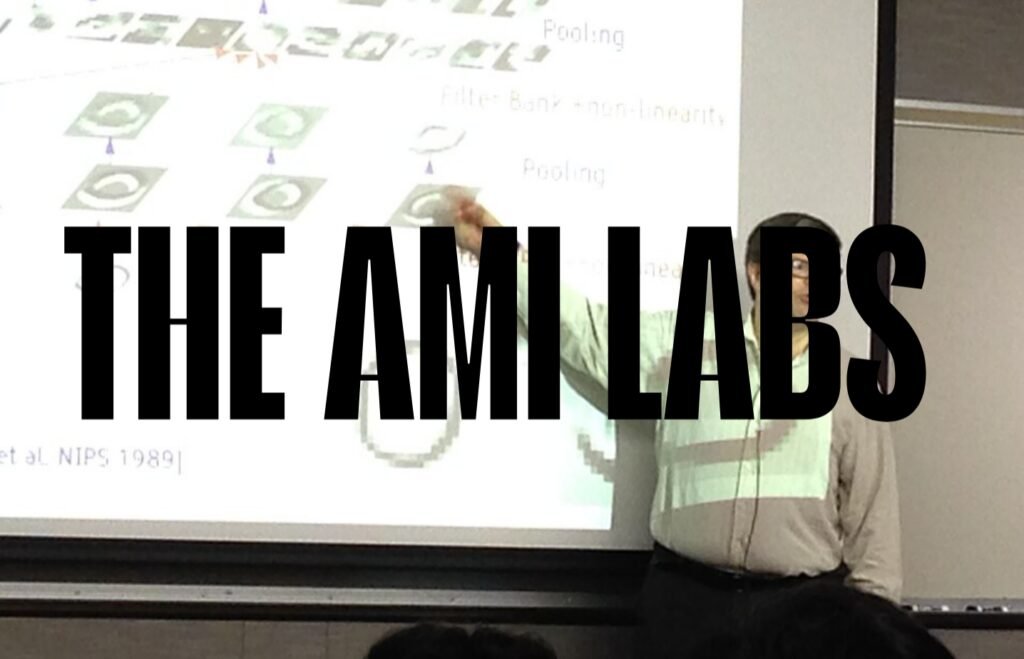
Yann LeCun Left Meta to Build AI That Actually Understands the World
Most people know Yann LeCun as one of the pioneers of modern AI. He won the Turing Award and led Meta's AI research lab for years. Earlier this year, he surprised many by leaving Meta to co-found AMI Labs, a startup that could soon be valued at nearly $1 billion. The company centers on one bold idea: the AI we’ve been developing in recent years is fundamentally flawed.
The Problem With ChatGPT
LeCun makes a clear but radical point. Large language models—like ChatGPT, Gemini, and Claude—are essentially very advanced autocomplete systems. They predict the next word based on patterns found in text. While their results may impress, LeCun argues that this approach leads nowhere when it comes to creating truly intelligent systems.
His reasoning is simple: language is a limited and imperfect representation of reality. The physical world is more complex and varied than any collection of text can capture. A model trained only on words lacks a real understanding of gravity, friction, outcomes, or time. It can describe a car crash in detail but doesn’t understand why crashes occur or how to prevent them.
LeCun's goal is to create AI that learns like animals do—through observation, memory, action, and prediction. This means not just reading about the world but constructing an internal model of it.
What AMI Labs Is Actually Building
AMI Labs is working on what researchers call world models. Instead of guessing the next word in a sentence, these systems predict what might happen next in a given situation. They create internal representations of how the world functions and use those models to plan actions in uncertain situations.
AMI's technical approach relies on something known as JEPA (Joint Embedding Predictive Architecture), which LeCun developed at Meta's AI lab, FAIR. In simple terms, rather than generating outputs pixel by pixel or word by word, the system operates in an abstract "latent space." It predicts the general shape of what comes next without focusing on every tiny detail. This makes it much more efficient and, according to LeCun, aligns more closely with how biological intelligence operates.
The practical implications are considerable. A world model can plan, reason about outcomes, and handle noisy or incomplete sensor data. These are abilities that chatbots often lack but are essential for robotics, industrial control, and medical applications.
Why Healthcare and Robotics?
AMI Labs is specifically targeting two sectors where current AI tools fall short and where mistakes can be costly.
In robotics, the aim is to create machines that perceive situations, predict what will follow, and plan actions in real time. Imagine a warehouse robot that doesn’t just follow a set path but adapts if something blocks its way. Or consider a manufacturing system that can spot an anomaly, assess what might go wrong if it continues, and intervene before damage occurs. These tasks require real planning skills, not just generating text.
In healthcare, AMI focuses on areas like wearable health monitoring, clinical decision support, and assisting with patient triage. The emphasis on safety and reliability is intentional. Healthcare is a field where clarity is crucial, where mistakes can have serious consequences, and where a fluent chatbot that misleads is worse than having no AI at all. A wearable device that detects early signs of patient decline and alerts clinical staff promptly is exactly the type of high-stakes application that LeCun's approach aims for.
AMI's first publicly confirmed partnership is with Nabla, a healthcare AI company. This suggests that healthcare may be their initial major commercial focus before expanding into robotics.
The Team They're Building
The hiring trends at AMI Labs paint an interesting picture. Key individuals have come from Meta, DeepMind, and Nabla. This blend of top-tier research talent and experts who have experience launching products in regulated industries indicates that AMI aims to be something most AI research labs do not become: a bridge connecting cutting-edge research with real-world applications.
Pure research labs produce studies. Pure product companies often overlook scientific rigor. AMI appears to bet that the world-model approach is only valuable if it translates into infrastructure that other companies and industries can build on.
What Makes This a Big Deal
Many reports overlook a critical point. AMI Labs is not just another AI startup working on a better chatbot. It aims to redefine what the next generation of AI will look like.
If large language models made language the main interface between humans and machine intelligence, AMI seeks to make physics, action, and prediction the new interface. This represents a fundamentally different vision for what AI should entail.
Investors seem to recognize this potential. The funding and valuation, even before a product launches, suggest that the market views world models as a legitimate next step rather than just an academic idea.
There is also a more subtle strategic element. Even if AMI never becomes a mass-market consumer company, it could play an influential role as a standard-setter for how world-model AI gets developed and evaluated. The company that outlines the research agenda for the post-large language model era doesn’t need to have a billion users to be significant.
The Bottom Line
LeCun’s gamble is this: intelligence isn’t just about predicting words. It’s about understanding outcomes. AI systems that will work effectively in hospitals, factories, and the physical world need to model reality, not just describe it.
AMI Labs is still in its early days, unproven, and ambitious to a degree that might lead to failure. However, if LeCun is correct and the current methods of AI reach a limit that larger models and more data can’t overcome, then the company he founded could become the most important startup of the decade.

 Advertisement