DFRobot’s New Bendable AMOLED Display
- by : Ritesh Sahani
- May 15, 2026
- No Comments
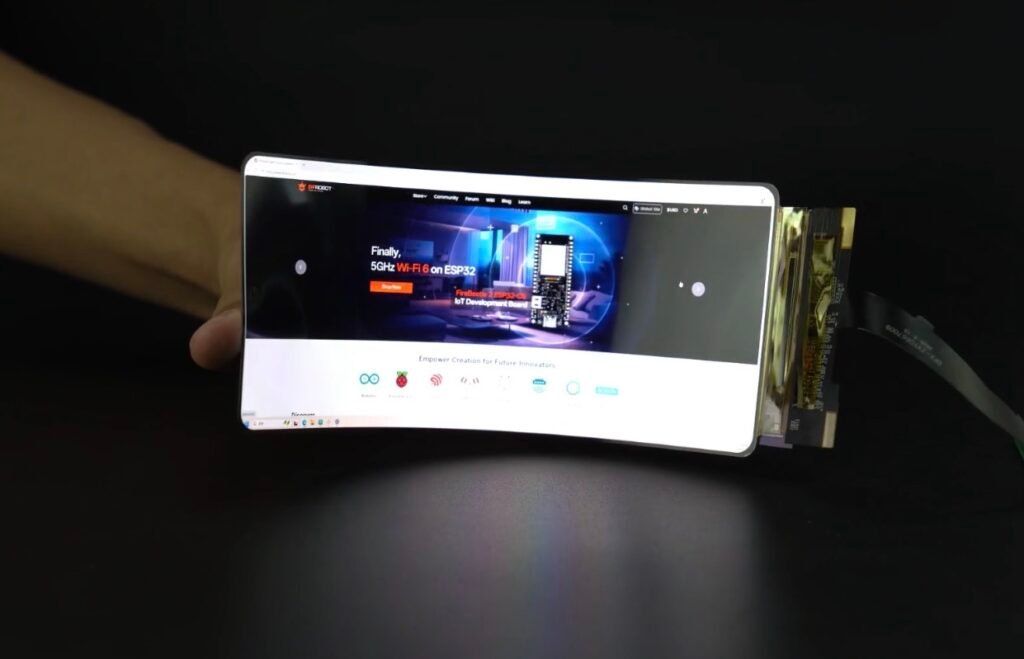
The DFRobot has launched a new 6.67-inch flexible AMOLED display designed for developers, makers, and Raspberry Pi enthusiasts. Unlike normal flat LCD panels commonly used in DIY electronics, this display can bend and curve around surfaces, opening the door for more futuristic hardware designs, The panel comes with a dedicated HDMI driver board, which is one of the most important parts of the product. Flexible smartphone displays are usually difficult to use because they rely on complex MIPI interfaces and custom connectors. DFRobot simplifies that process and makes the display usable with devices like Raspberry Pi, LattePanda, Orange Pi, and other HDMI-supported boards.
The display offers:
- 2400 × 1080 resolution
- AMOLED technology with deep blacks
- 1.2 mm thin profile
- 16.7 million colors
- 450 nits brightness
- 50Hz refresh rate
This is not a foldable display like modern folding phones. Instead, it is designed to gently bend and fit curved surfaces without sharp folding.
Why This Display Is Interesting
Flexible OLED technology has existed for years in products from companies like Samsung and LG. The difference here is accessibility. Most flexible displays stay locked inside expensive commercial products, while hobbyists struggle to integrate them into projects.
DFRobot is trying to change that by creating a developer-friendly package. Instead of forcing makers to deal with fragile smartphone connectors and undocumented hardware, the company provides a ready-to-use solution.
That makes the display useful for projects such as:
- AI assistants
- robotics faces
- wearable computers
- curved dashboards
- cyberpunk terminals
- futuristic smart mirrors
- industrial control systems
For creators building experimental hardware, this type of display can completely change how projects look and feel. A curved AMOLED interface immediately gives projects a more modern and premium appearance compared to traditional flat LCD screens.
The launch also reflects a bigger trend in the hardware industry. Advanced technologies that were once available only to large electronics companies are slowly becoming accessible to independent developers and small creators.
The display is impressive, but it is not perfect.
The 50Hz refresh rate means it is not ideal for gaming or very smooth animations. Flexible AMOLED panels are also more fragile than regular LCD screens, so handling and mounting require extra care. Like other OLED displays, long-term static images may eventually lead to burn-in issues.
The price is another factor. At roughly $199, it is more suited for advanced projects and prototypes than budget DIY builds.
Still, the product has strong potential in the maker community. Hardware creators are constantly searching for ways to make projects stand out visually, and flexible displays offer something that still feels futuristic in the DIY world.
For platforms focused on electronics, AI, robotics, and innovation projects, products like this could inspire an entirely new category of builds over the next few years.
 Advertisement
Stay in the loop
Get Updates every week.